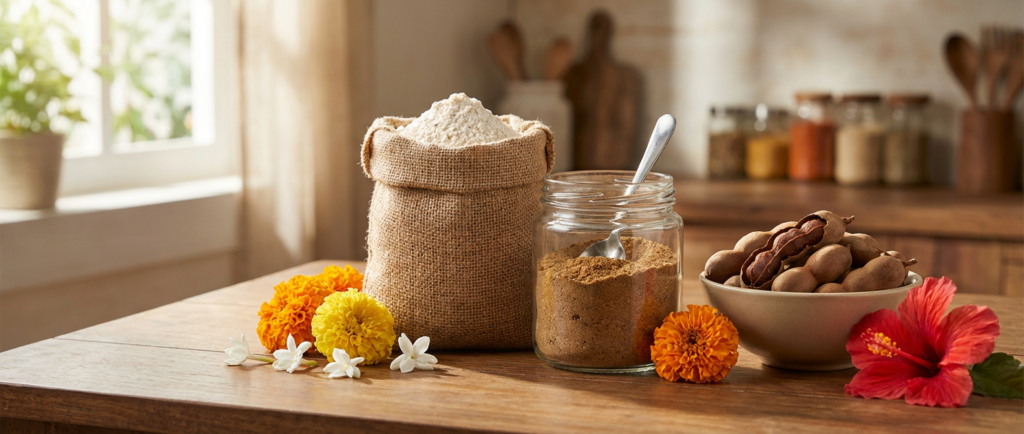
The Numbers Don’t Lie: South Asian Ingredients Are Everywhere Now
I remember the days of hunting through three different grocery stores to find decent atta. Now I can grab it at my regular Kroger next to the all-purpose flour. That shift isn’t just convenient for me — it’s part of something genuinely significant happening in American food culture right now.

The numbers confirm what I’ve been seeing in my own neighborhood. Sales of South Asian grocery staples in mainstream supermarkets jumped 34% between 2024 and 2025, with tamarind paste, chaat masala, and whole spice blends leading the charge. These aren’t niche items anymore. They’re sitting on shelves designed for mainstream customers who are actively looking for them. That’s not an accident. That’s demand.
What makes this moment different from previous food trends is the staying power. When I started cooking more seriously, “ethnic foods” would spike around certain seasons or holidays, then fade. Tamarind would disappear from shelves in January. Chaat masala was a once-in-a-while luxury. Now these ingredients are permanent fixtures, which means people are actually cooking with them year-round, in everyday meals, not just for special occasions.

Where the Real Shift Started: Cookbooks and the People Who Write Them
Publishing matters. I know that sounds abstract, but consider this: the James Beard Foundation cookbook awards went to a South Asian diaspora author for the second consecutive year in 2025. That’s not tokenism. That’s a deliberate recognition of a body of work so strong it can’t be ignored two years running.
When major publishers start betting serious money on South Asian food narratives, it sends a message down the supply chain. Bookstores order more copies. Food writers take these books seriously. Home cooks see them on bestseller lists and think, “Maybe I can actually do this.” The cookbook stops being just a book. It becomes validation that this cuisine matters enough to study, to master, to write about with the same depth and respect given to French technique or Italian tradition.
I’ve watched my friends’ cooking confidence shift dramatically. Three years ago, attempting a proper curry felt like a risky experiment. Now it feels accessible, almost inevitable. That confidence comes partly from better recipes, yes, but also from the cultural messaging that says: this is worth your time and effort.
Atta’s Rise: From Specialty Item to Staple in Five Years
Here’s something that genuinely amazed me: atta appeared in over 120 major recipe features in American food publications in 2025. Five years earlier, in 2021, that number was fewer than 20. Food editors weren’t assigning atta stories by accident. They were responding to reader interest, and readers were asking for them. That’s the real indicator of a cultural shift.
What makes atta’s specific rise interesting is how practical it is. Unlike some food trends that appeal to novelty-seekers, atta solves an actual problem. Once you’ve had a proper chapati made with atta, all-purpose flour feels thin and hollow. The texture is different. The nutrition profile is better. It’s not about pretension — it’s about getting better results. That’s why home cooks stick with it.
The quality you can find now matters too. I’m not talking about dusty bags from the back of specialty stores. Mainstream retailers are stocking brands that understand humidity control, packaging, and freshness. The atta I buy today is better than what I could source five years ago, even from specialized vendors. That improvement in quality is non-negotiable if you’re going to convert skeptical home cooks.
Direct-to-Consumer Brands Are Changing the Game
Companies like Diaspora Co. single-origin South Asian spices saw their revenue jump 200% between 2023 and 2025, and by mid-2025 they’d expanded to Whole Foods and Target. When Target puts a product on its shelves, it’s not guessing. It’s responding to data showing customers actually want to buy it.
What’s smart about this evolution is that direct-to-consumer brands didn’t just make South Asian ingredients available, they contextualized them. They told stories about where these spices came from, why quality matters, and how to use them. That education piece is crucial. Availability without education leaves people confused standing in the aisle. Education plus availability creates actual cooks.
The retail expansion also removes friction. I can now walk into Target and buy high-quality chaat masala without planning a special trip or ordering online and waiting. That convenience is what converts casual interest into genuine habit. You don’t just stumble upon this kind of convenience, it’s built on demand infrastructure that had to be earned first.
The Real Proof: 41% of Non-South Asian Americans Are Actually Cooking This Food
Here’s the number that stopped me in my tracks: according to a 2025 Pew Research survey, 41% of non-South Asian Americans had cooked an Indian or Pakistani recipe at home in the past year. In 2019, that was 24%. That’s not a modest increase. That’s a fundamental shift in what American home cooks consider normal.
I want to be honest about what this means. This isn’t “South Asian cuisine is trendy.” Trends burn out. This is “South Asian cuisine is becoming part of the American culinary baseline,” which is genuinely different. When nearly half of non-South Asian households have made something as involved as a proper curry, you’re not talking about a trend anymore. You’re talking about cultural integration.
What excites me most is what comes next. Once you’ve cooked one curry competently, you start asking better questions. You start understanding the difference between tadka and tempering. You start thinking about how acid and spice balance each other. You become a more sophisticated cook. That’s really what this moment is about. It’s not just atta and tamarind paste sitting on supermarket shelves. It’s home cooks developing deeper culinary literacy, one recipe at a time.
I’d love to know what’s in your pantry right now. Are these ingredients already part of your regular rotation, or are you thinking about building that collection? Drop a comment and tell me what South Asian staple you’re most excited to work with, or what you’ve been too nervous to try.
